
Dark fantasy vs gothic fantasy: the space between
Two useful lenses for reading a story: the danger beyond the door and the past that refuses to leave.
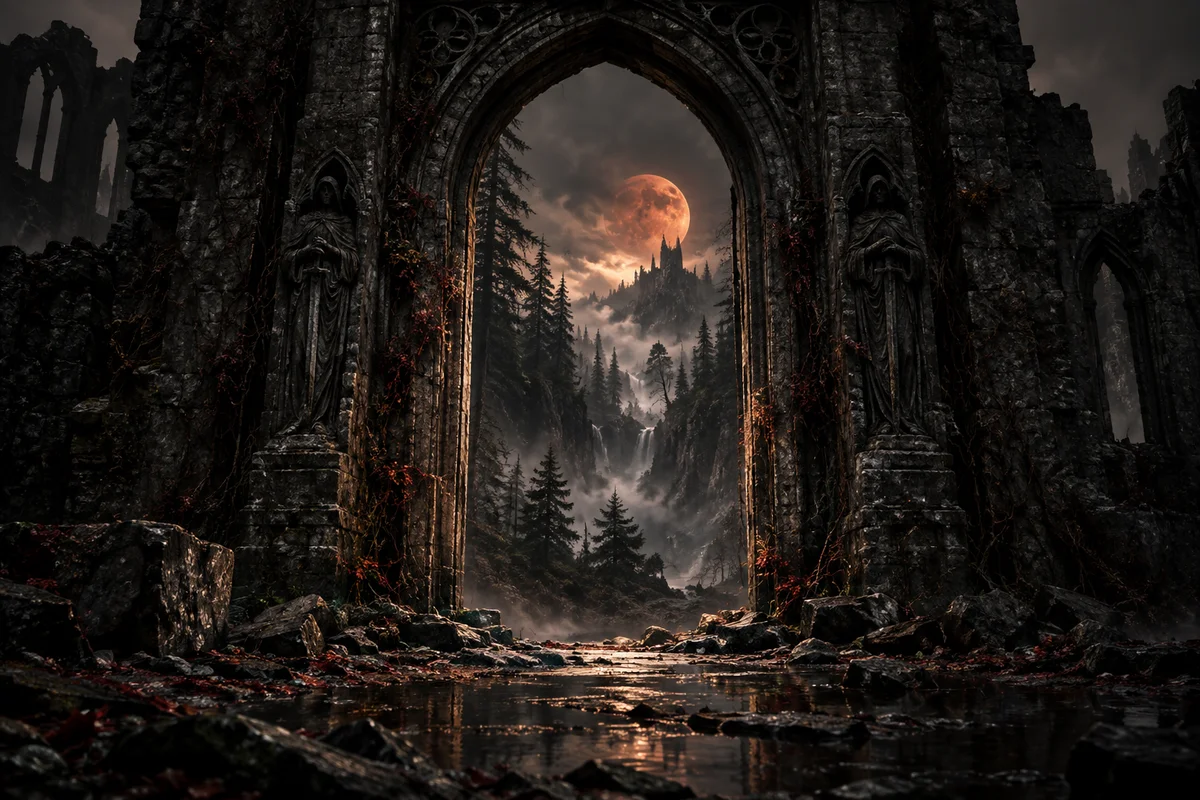
When a book offers a ruined castle, a dangerous creature and a family secret, which part makes it dark fantasy, and which part makes it gothic? For a reader, the more useful question may be what each lens brings into focus.
The distinction offered here is a reading approach, not a fixed classification system. A single novel can invite both readings, and readers can disagree about which one is most revealing.
Looking outward: danger and consequence
Through a dark-fantasy lens, we can look at what happens when the impossible enters a world and makes its moral choices harder. Magic may solve an immediate problem while creating a lasting cost. A creature may threaten a village and also expose the cruelty of the people defending it.
The important detail is not simply that terrible things happen. It is how the story makes power, survival and responsibility rub against each other. If a character can save someone only by harming someone else, the supernatural premise becomes a way of putting an ordinary moral difficulty under pressure.
Looking inward: inheritance and confinement
A gothic reading can turn our attention toward what a place or a family refuses to release. A locked room matters because of who locked it, what happened there, and why nobody is allowed to ask. A house becomes more than scenery when its rules shape the lives of everyone inside it.
Try watching for repetitions: a daughter asked to live like her mother, a promise renewed without explanation, a portrait that seems to decide a person’s future before they have spoken. The pressure comes from an inherited pattern as much as an immediate threat.
Where the lenses meet
Imagine a gate that can keep a dangerous creature outside, but opens only when a family member gives up a memory. Read one way, the gate is a magical defence with a price. Read another way, it is a family institution that consumes the people it claims to protect.
Neither reading cancels the other. Together they make the imagined gate more interesting. The danger outside and the cost inside become parts of the same question: what kind of safety is this family buying?
Choosing your next reading experience
Instead of looking only for a label, look at the questions a book’s description raises. Does it promise difficult choices in a dangerous imagined world? Does it draw you toward a hidden history, an oppressive home, or a relationship that cannot escape its past?
Those questions can help you describe what you enjoy without requiring every novel to fit neatly into one category. Sometimes the most memorable reading experience happens precisely where the labels overlap.