
Why root for the monster?
What changes when a frightening creature becomes the one whose survival matters to us?
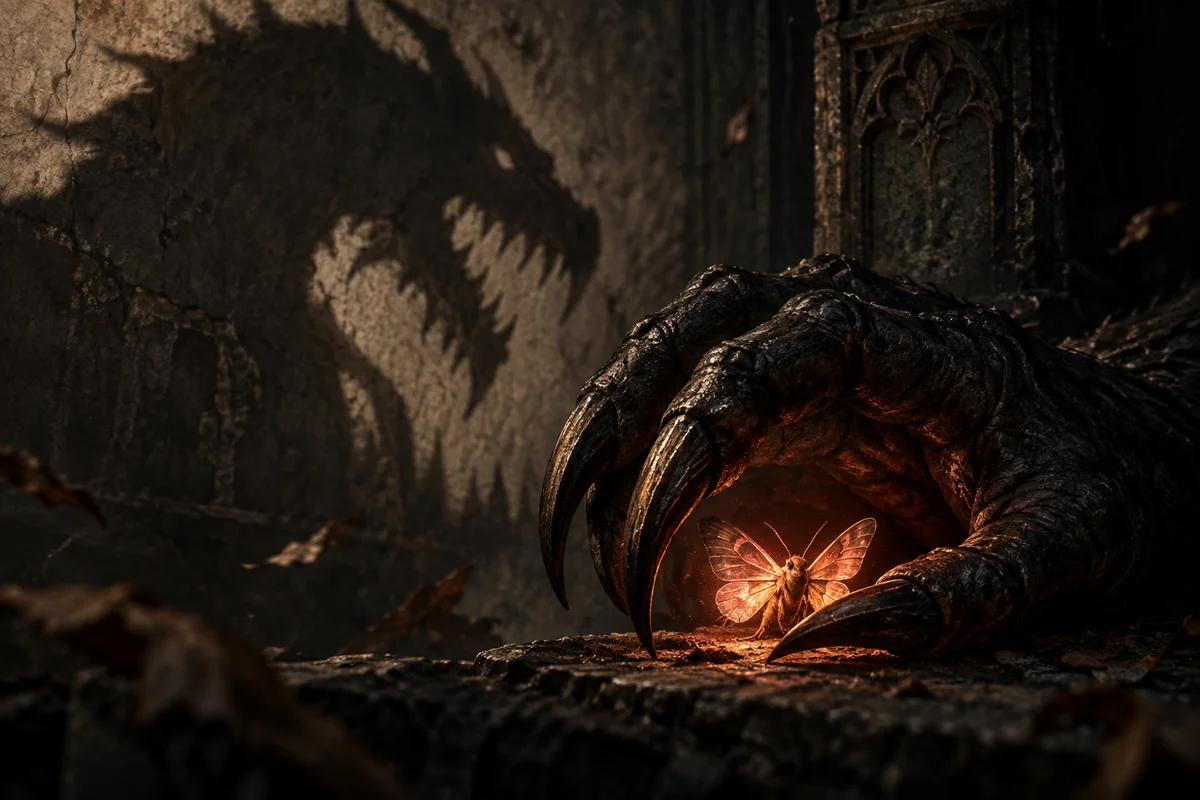
A creature appears at the edge of a forest. From the village, we see a threat. From beside the creature, we may see hunger, injury or an attempt to find shelter. The events can remain the same while our attention changes everything.
This is one of the pleasures of reading a monster’s story: the chance to notice how quickly we make a judgement, and what happens when a narrative asks us to stay longer.
Getting close enough to notice
Distance simplifies. A silhouette can stand for danger because we know almost nothing about it. Give that silhouette a habit, a memory or something fragile to care for, and its actions become harder to reduce to a single purpose.
Tenderness can be especially revealing when it is specific. A creature moving an injured bird out of the rain is more interesting than a narrator merely announcing that it has a good heart. The gesture lets a reader make a judgement from behaviour.
But one tender act should not erase everything else. A frightening character becomes more compelling when tenderness and danger coexist without the story using one as an excuse for the other.
Belonging is a practical question
An outsider’s wish to belong can be expressed through very small things: being allowed through a doorway, being addressed by a name, being trusted to hold something delicate. These moments give exclusion a scale we can feel.
They also create choices for the surrounding characters. Who grants welcome? Who withholds it? Who benefits from keeping the outsider frightening? A monster can reveal the rules of a community simply by trying to enter it.
Caring is not acquitting
Rooting for a character may mean hoping they survive long enough to change. It may mean wanting them to find a place where they do not need to hurt anyone. It does not have to mean celebrating everything they do.
That distinction leaves room for a more demanding kind of sympathy. We can care whether the monster is wounded and still care about the people the monster wounds. A story loses some of its force when it asks us to forget one side of that equation.
The question that stays
At the end of a monster’s story, try asking what changed in your judgement. Did you learn new facts? Did the creature make a different choice? Or did the narrative simply let you see a life that had previously been kept at a distance?
Each answer describes a different route into sympathy. And each can send you back to the opening scene, to the shape at the edge of the forest, with a more patient eye.